How to Back Up a Synology NAS to Google Drive with Hyper Backup
Synology Hyper Backup can send scheduled, versioned backups from your NAS directly to Google Drive. This guide walks through the full setup, including folder selection, scheduling, encryption, rotation, testing, and restoration.
Google Drive remains a supported Hyper Backup destination. This is a true backup task—not the same as synchronizing files with Synology Cloud Sync.
Before you begin: Check that your Google account has enough free space for the first backup and future versions. If you enable client-side encryption, securely store the password and downloaded key; losing them can make the backup impossible to restore.
What you need
- A Synology NAS running DSM with Hyper Backup installed
- A Google account with sufficient available storage
- A stable internet connection for the NAS
- Administrator access to DSM and permission to authorize Hyper Backup in Google
Set up Hyper Backup with Google Drive
Step – 1 – Install Hyper Backup Application on Your Synology NAS
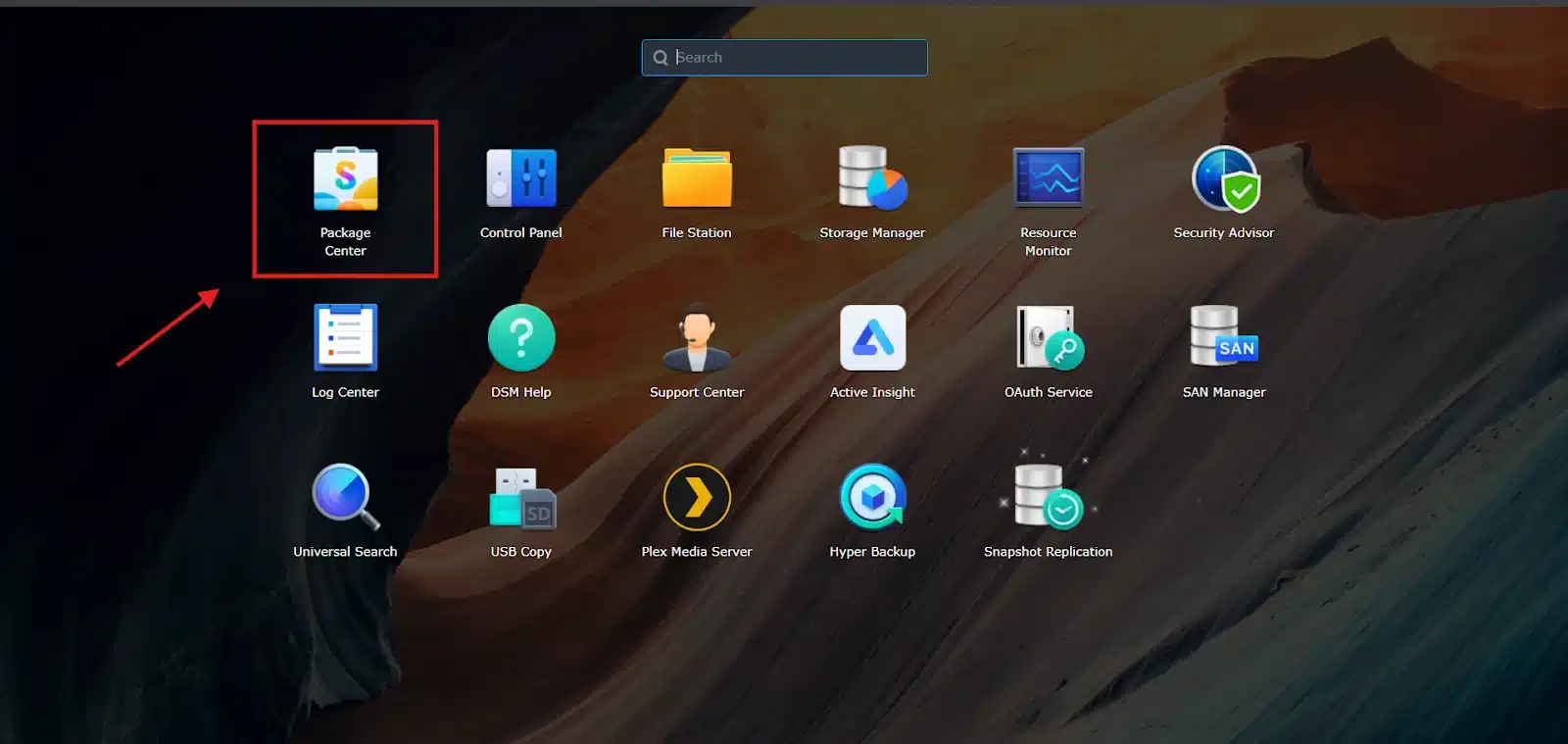
On Synology web management portal, open Package Center App:
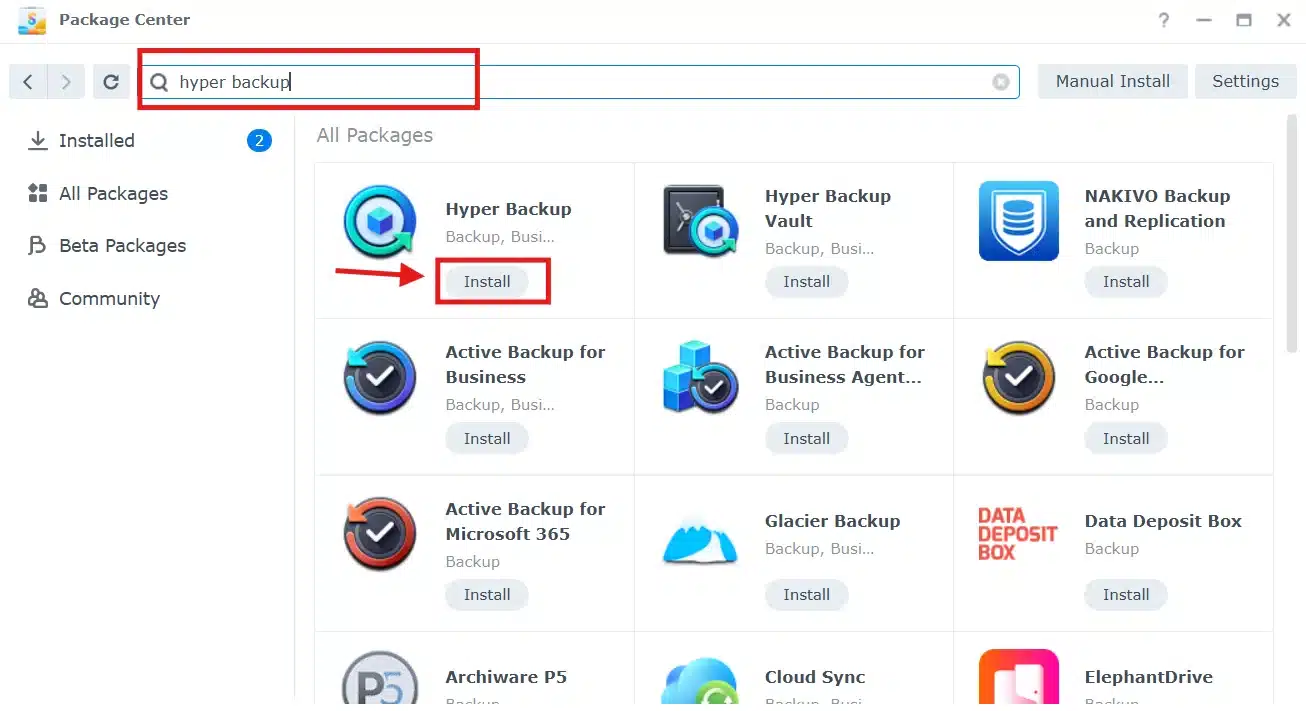
Search for Hyper Backup and Click “install”:
Step – 2 – Create Folder for NAS Backup in Google Drive:
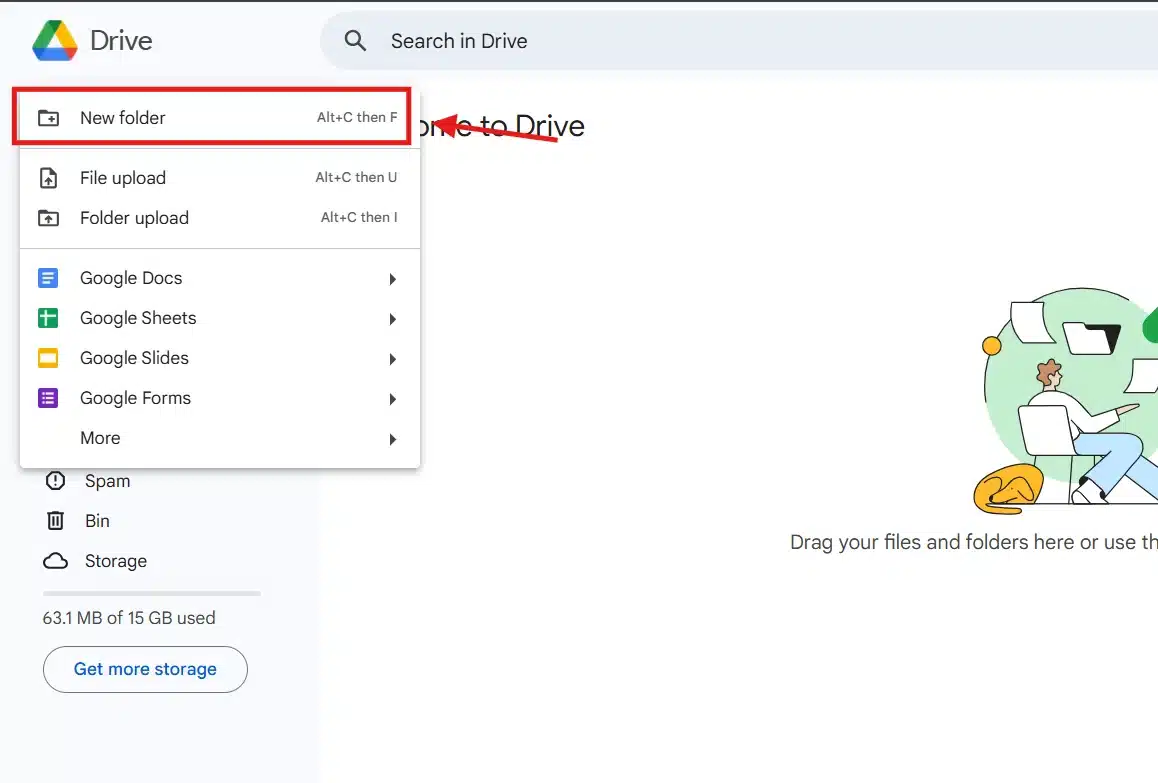
Open Google Drive and Click on “New” then “New Folder”:
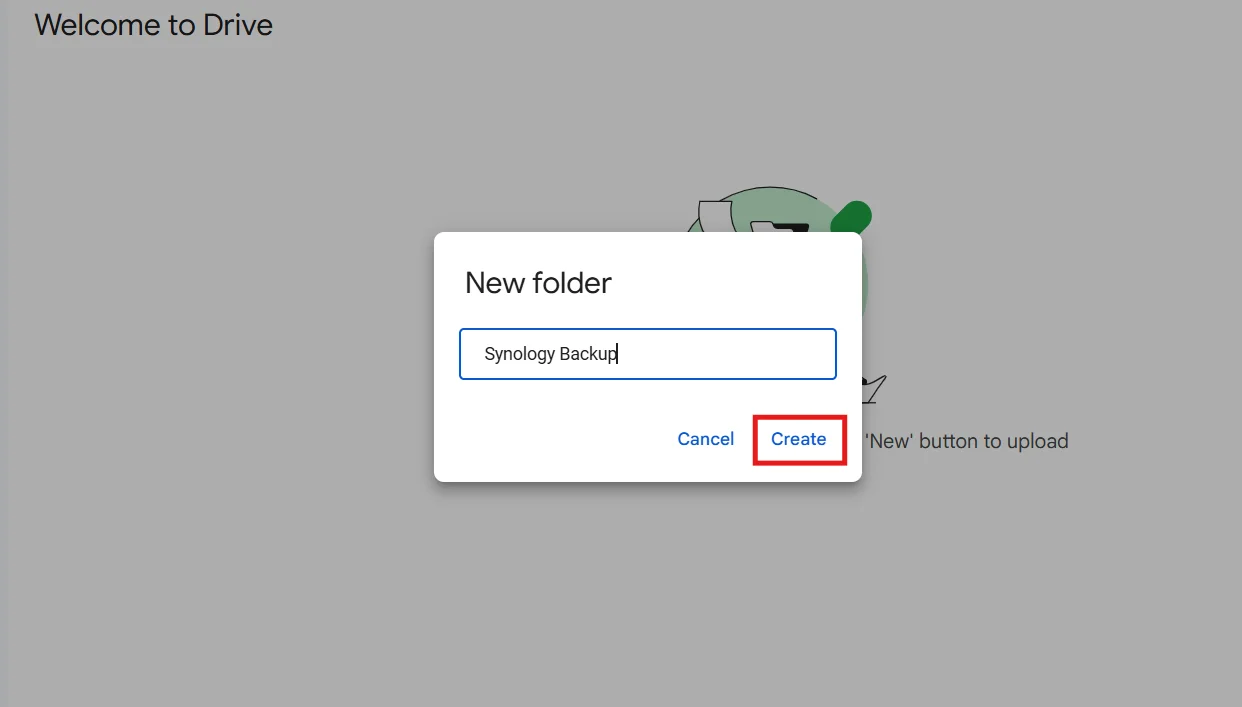
Give the Folder a proper name, then click “Create”:
Step – 3 – Create a Backup Job to Google Drive:
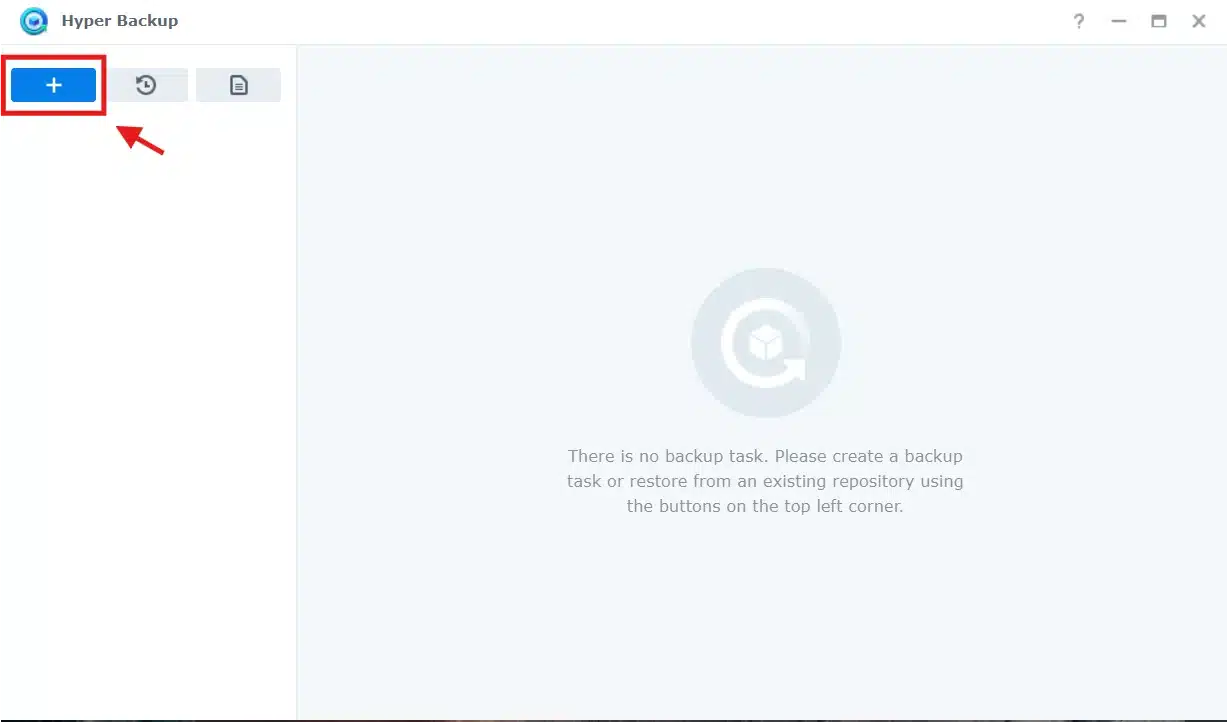
From Hyper Backup Application Windows, Click on the Icon to add a new Backup Job:
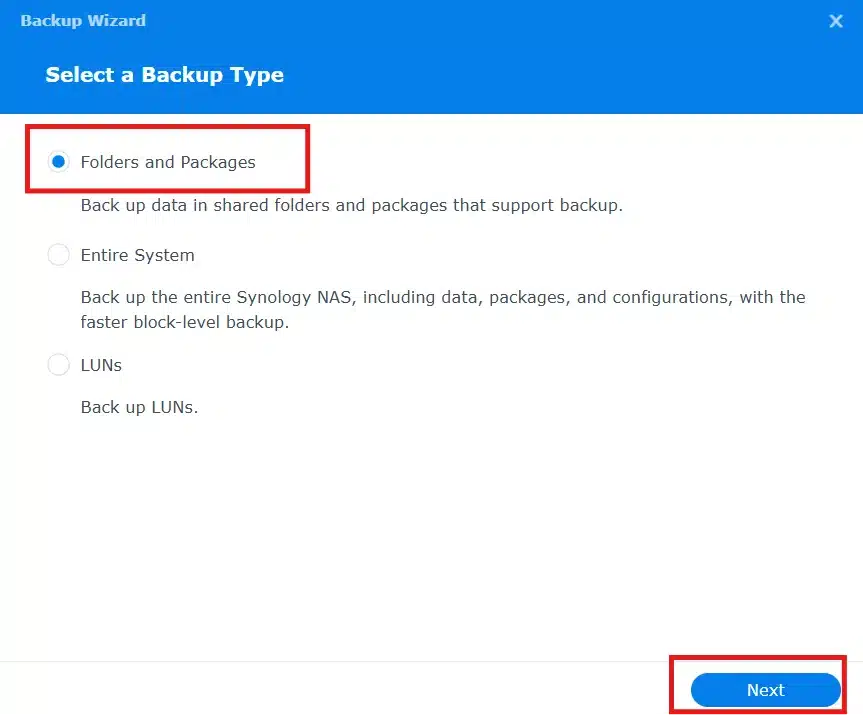
Select “Folder and Packages”, then “Next”:
For the Backup Destination, Select “Google Drive” then Click “Next”:
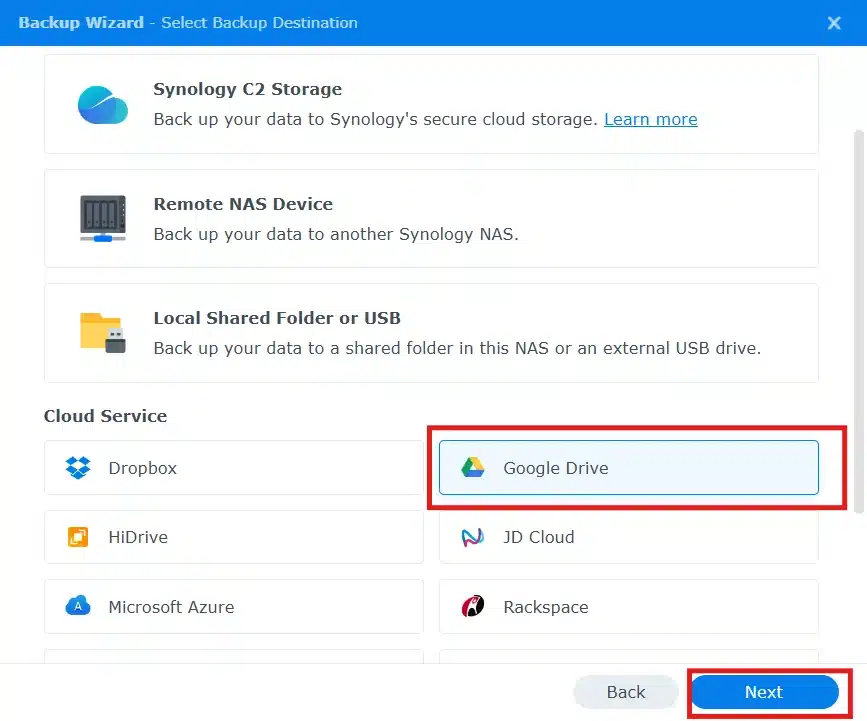
When you click “Next”, another window of your browser will open, here you need to sign in to your Gmail account, you can either select from the already logged in or login to another Account:
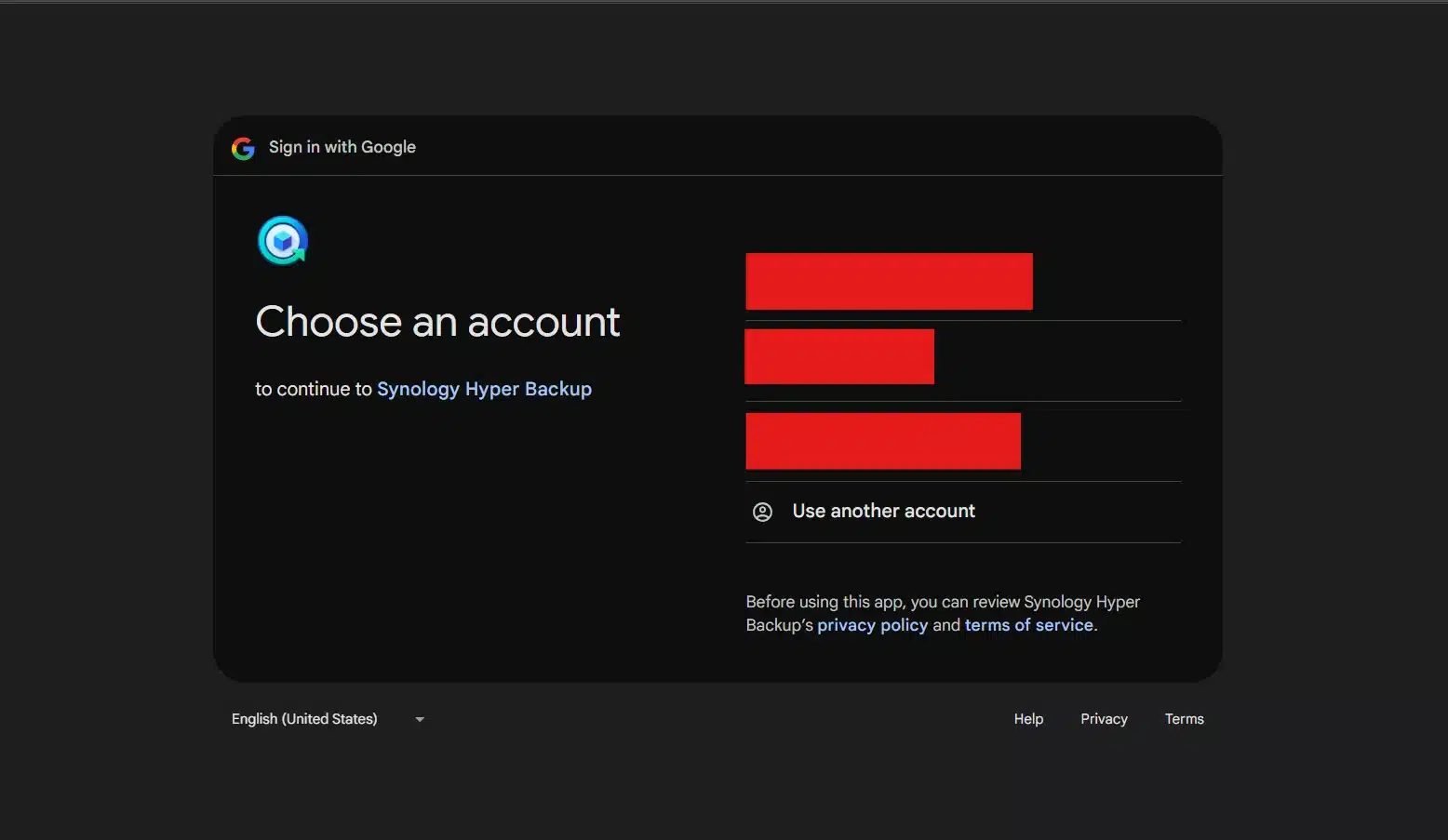
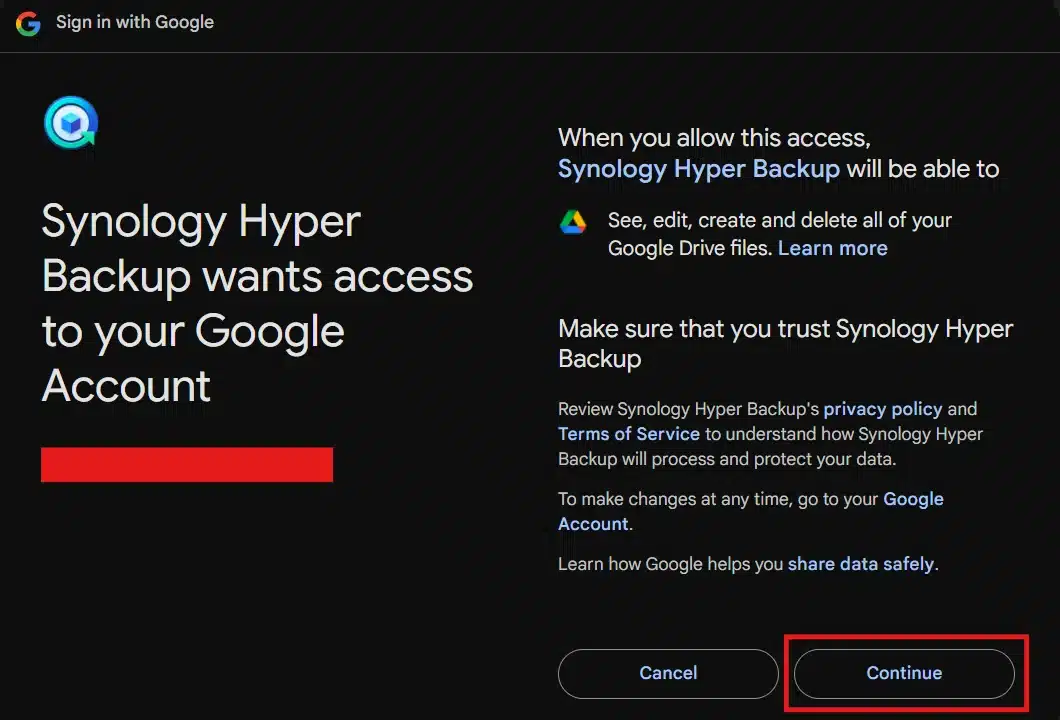
Grant permissions to Synology Hyper Backup:
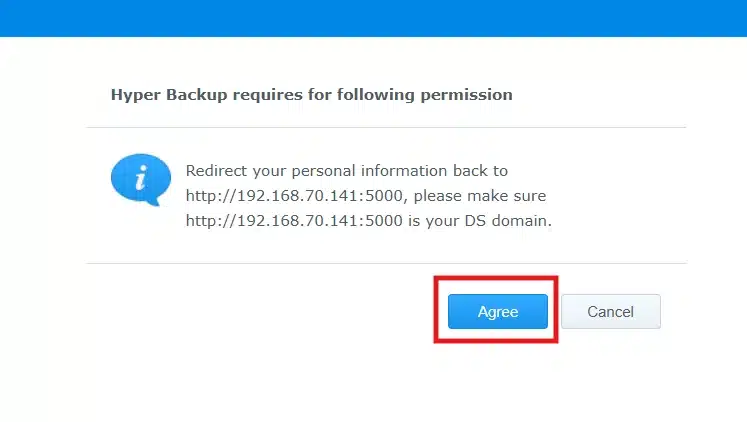
Here, click on “Agree”:
On the Destination Settings, select the folder created in the previous step:
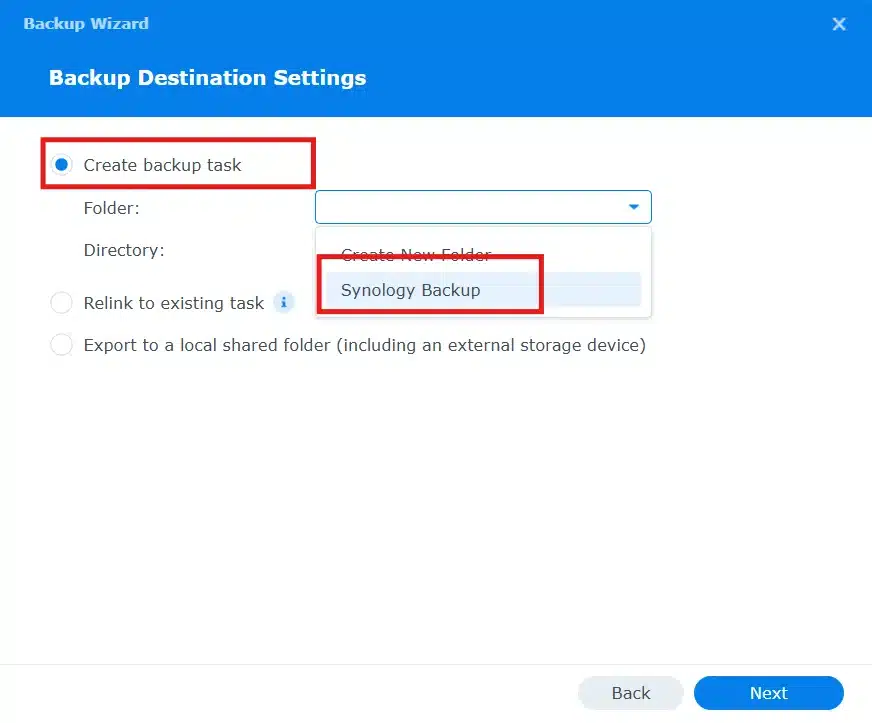
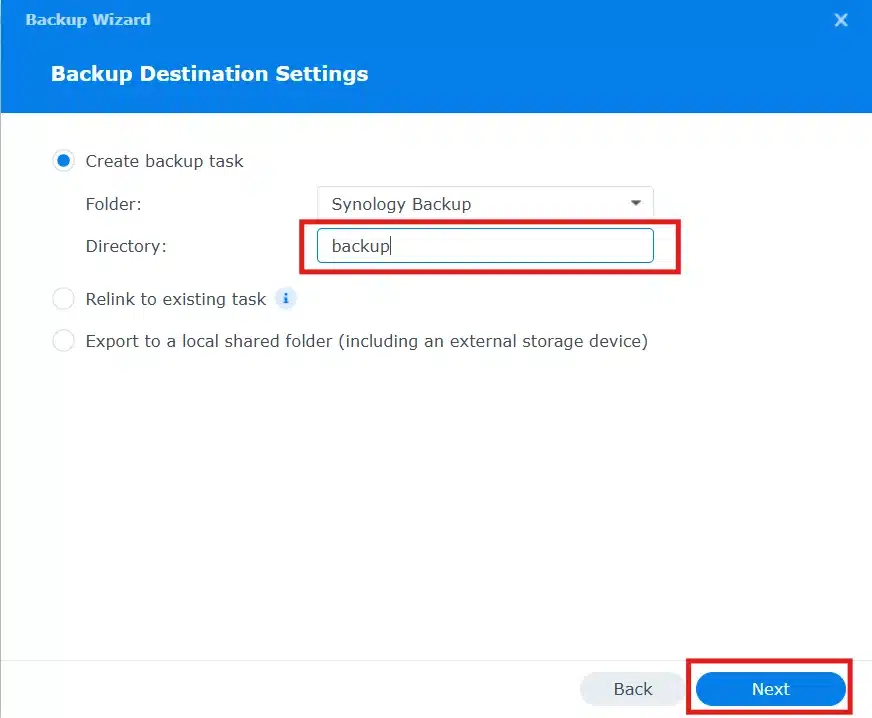
Give the Directory name, then click on “Next”:
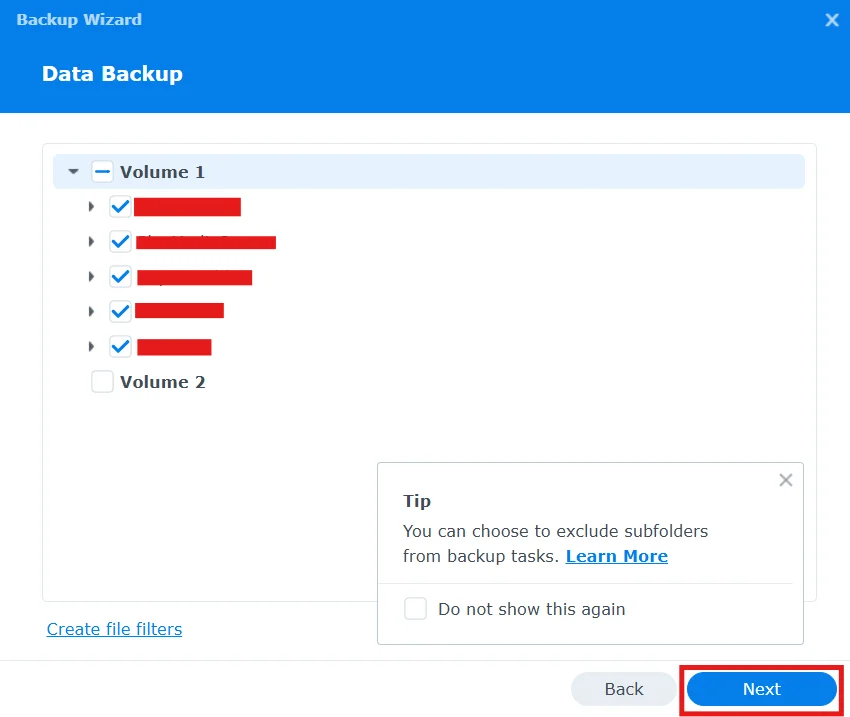
For the Data Backup, you can choose which shared folder you want to backup, or choose the entire Volume, here I will choose the Entire Volume1:
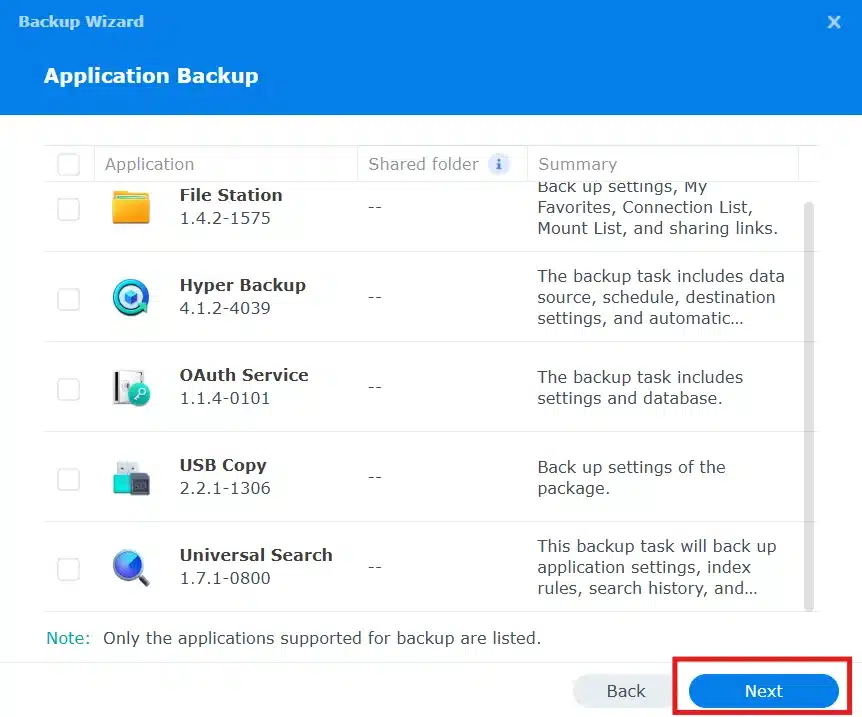
If you want to Backup an Application, you can choose here:
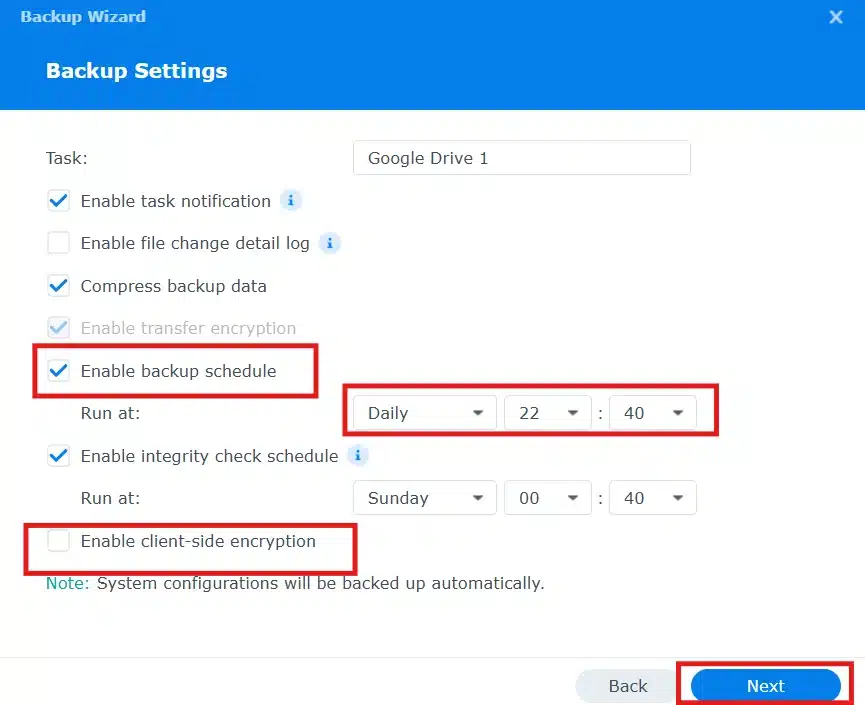
Here you can choose the backup schedule, and also choose if you would like to enable Client-Side Encryption, which will be more secure to transfer the data over the internet:
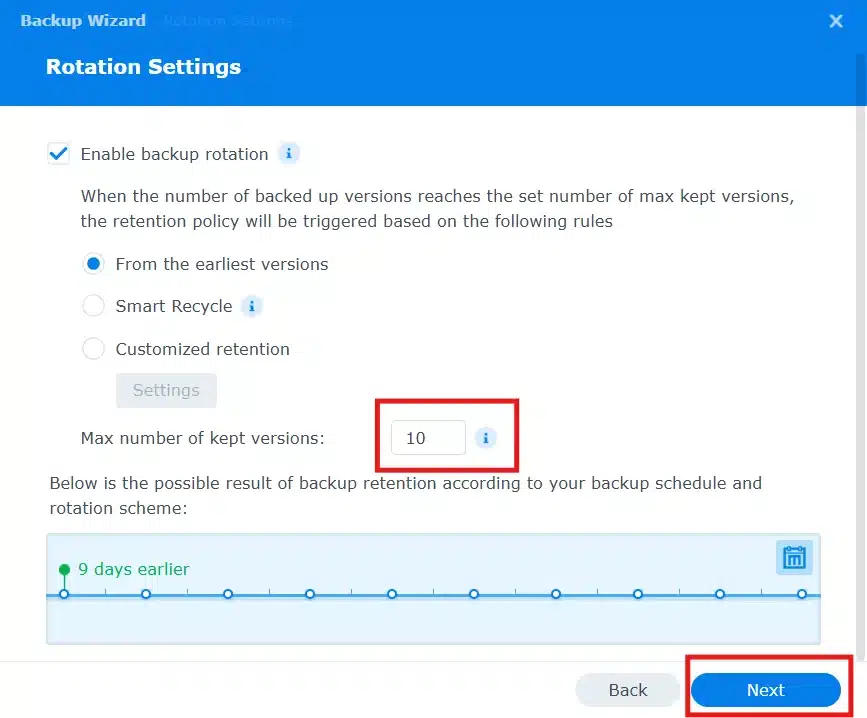
Next, you can choose how many copies of the backup you would like to keep on Google Drive:
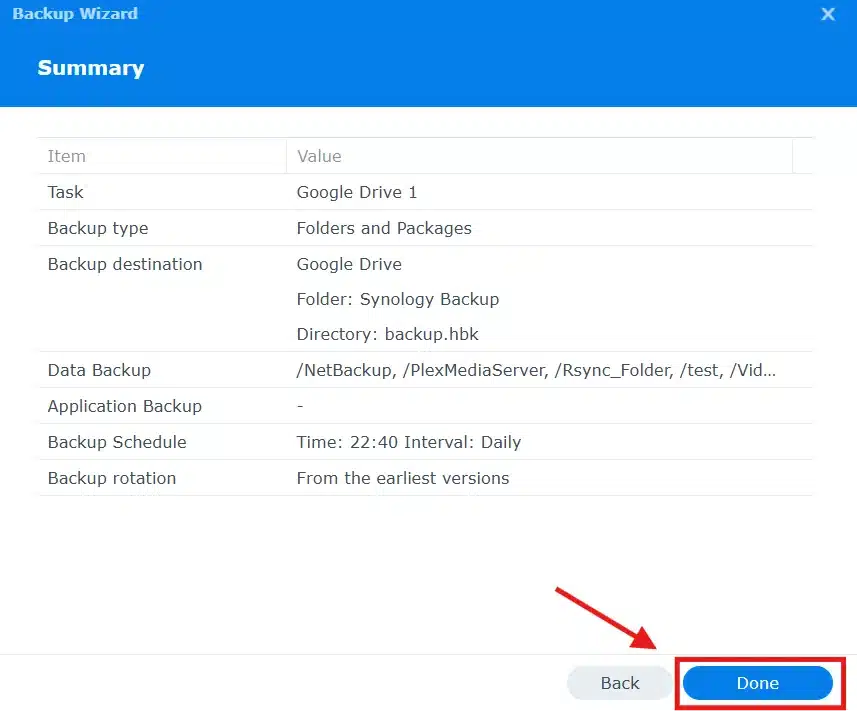
Now, review and click on “Done”:
Step – 4 – Test and Restore the Backup:
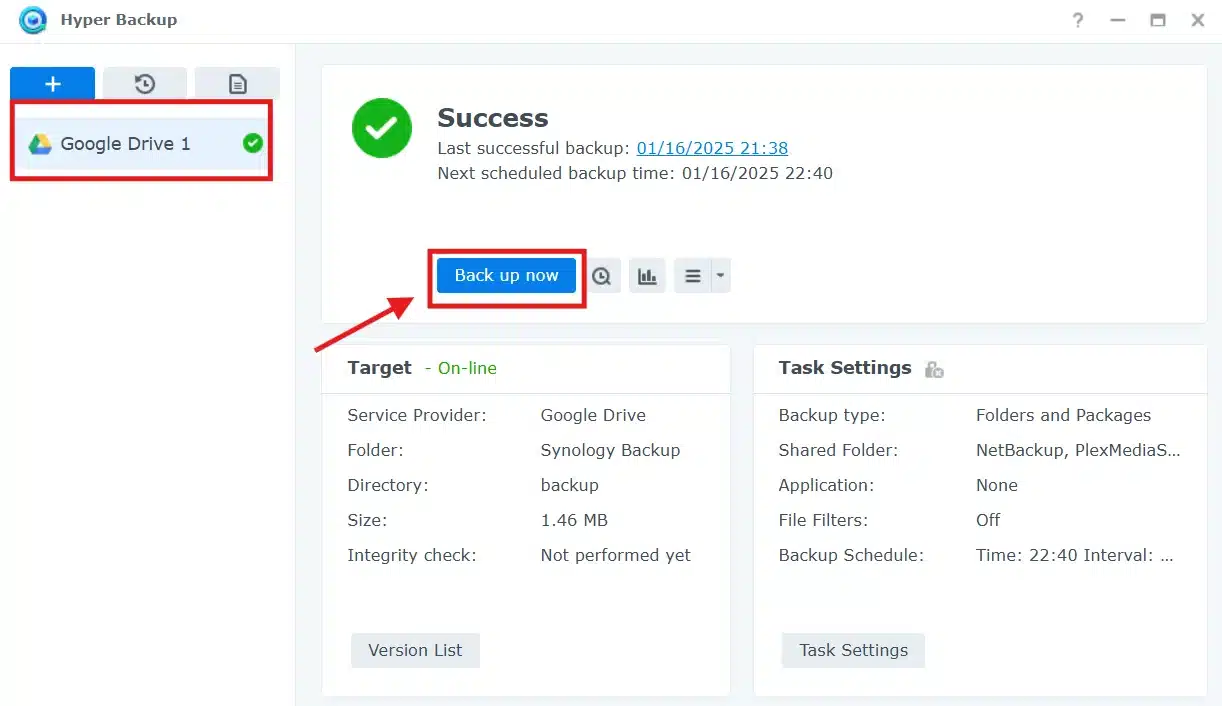
You can test the backup by clicking on “Back Up Now” button:
To restore from the Backup, check this article, it’s applicable for Google Drive Backup Also.
Recommended settings for most home users
- Schedule: Run the task daily during a quiet period.
- Rotation: Enable Smart Recycle so older versions are reduced automatically instead of filling Google Drive indefinitely.
- Encryption: Enable client-side encryption for sensitive data, but keep the password and key somewhere separate from the NAS.
- Integrity: Schedule periodic integrity checks and perform a small test restore after creating the task.
Frequently asked questions
Is Hyper Backup the same as Cloud Sync?
No. Hyper Backup creates a versioned backup repository designed for restoration. Cloud Sync keeps files synchronized between locations and serves a different purpose.
Can I browse the backed-up files directly in Google Drive?
A multi-version Hyper Backup task stores data in its backup format. Use Hyper Backup or Hyper Backup Explorer to browse and restore the contents.
What happens if I lose the encryption password or key?
You may be unable to restore the encrypted backup. Keep both outside the NAS in a secure password manager or another protected location.
Should I rely on Google Drive as my only backup?
No. For important data, keep another independent copy, such as a local USB backup or a second NAS. One cloud task is useful, but it is not a complete backup strategy by itself.
Conclusion
Backing up your Synology NAS to Google Drive with Hyper Backup gives you an automated off-site copy with version history. The setup is only complete after you run the first backup, check its status, and successfully restore a test file.
If you prefer local Backup, You can always backup your Synology to another server, using Rsync